
The History of Ascent

The History of Ascent
1980’s


Before the formation of Ascent, Michael Bray operated Michael Bray & Associates. It all started back in the 1980’s Michael Bray begun construction of the Cannington Mason Street offices (that are still being used today). Whilst the units were under construction, a caravan was used as a temporary office, similar in style to the one pictured below;

Unfortunately during winter it was freezing in the caravan and the heat during summer was almost unbearable!


Once the buildings finished, the team moved into Unit 6, 38 Mason Street. It was a small unit but it was ideal for Michael and Helen Lacey who had just started building the business.


Michael Bray

1990’s


In 1997 a rather young Nigel Parker started part time as a graduate accountant whilst studying at Curtin University. Back in those days the technology was very limited. All the network run back to Michael’s laptop and we lost count on the number of times he forgot to bring it in to work and had to drive home to get it.


A young Nigel Parker

Ascent Business Directions (WA) started on the 1st July 1998 as a result of a merger between Michael Bray & Associates and the Melbourne based Ascent Business Directions. At the time of the merger both businesses had a lot of similar clients involved in Network Marketing. Ascent Business Directions wanted an office in WA and Michael saw this as a great opportunity to grow his business.

This was also Nigel’s first day of full-time work. It was almost his last! The first day Michael was out of the office and Nigel needed to see a new client. It worked out this client had major problems and Nigel was interrogated by the ATO at their old Cannington office. To say he was out of his depth was an understatement.


Ascent Business Directions Logo in 1998

The Directors of the original company were Michael Bray and Mark Letten. The business remained in Unit 6 for the first few months. Though we were running out of room. Nigel’s desk was right next to the front door. Every time a client walked in and opened the door it smacked into the desk. At least it woke him up but that’s where the messy hand writing came from as the desk was always being bumped as he wrote.


Within 6 months Ascent moved into the bigger office at Unit 3, 38 Mason Street. The staff grew as the business grew. We had Joan and then Annette working in Sales and Daniella and Dana started in admin and reception. Nigel was promoted to General Manager as Michael needed to take significant time off to look after his sick wife.


2000’s

By 2000 the business and staff had grown to the stage that we needed to operate from 2 of the Mason Street Units, being Unit 3 and Unit 5. Although the units were networked there was still a lot of walking between offices. Filing was in Unit 3 but the boardroom and reception was in Unit 5. It was a great way to keep fit! Between the offices of Unit 3 and Unit 5 was a firm of private investigators, who were also Ascent clients. They took great pride in scaring clients and staff as we made the walk between units. The big problem was the waste of time when they called you in to tell stories that can’t be repeated.


Bora started in 2001 as a fresh graduate accountant straight from Curtin University. His experience of previously working in the Sizzlers kitchen while at Uni impressed us. Especially how to cook the perfect steak.


A young Bora Heng 

By the time Katrina started in 2002, Ascent was operating from 3 of the Mason Street Units, being Unit 2, Unit 3 and Unit 5. The reception had moved to Unit 2 with Michael and Murray (sales). The admin team and Nigel where in Unit 3. The filing room was in Unit 5 with the accountants Bora, Simon and for a short period of time Gene and Chantelle.


A young Katrina Martin

Mark Letten sold out of Ascent (WA) in April 2003. Nigel purchased his share of the business. Michael and Nigel continued to grow the business together during this time. The Melbourne arm of Ascent was phased out and the emphasis was to grow our Perth client base. However clients were (and still are) spread out all over WA. Nigel was in charge of seeing Country clients and organised 2 or 3 trips a year to the county each year to various locations.


Michael and Bora for a number of years did their annual trip to Kambalda to do the miners tax returns. It was for 2 weeks each year in mid July. It was a real eye opener for Bora as they stayed in the miners Dongas and had their meals in the Camps mess. Some of the miners were 3 times the size of Bora but they all got to know him and looked forward to his visit each year.


Our first staff trip was in 2004 to Melbourne for reaching targets for the year. It was designed as a footy weekend away but the girls were not impressed they had to attend the footy. They were there for the shopping! It was a great way to say thanks to the staff but also great for team spirit to spend those days away together. Since that first trip to Melbourne we have done a number of other trips. At least 5 times to Melbourne for the footy weekend away. The Freo and Eagles supporters love getting over there to support their team but the girls still love getting over there to shop and spend their money. Bora always got into the spirit of the AFL games. When we went to watch the Saints play one year they had another loss. Bora took pride after the game in taking off his jumper and walking back to the hotel wearing a shirt that he had made up. It read “ Saints – rebuilding since 1966” Great way to make friends in Melbourne!


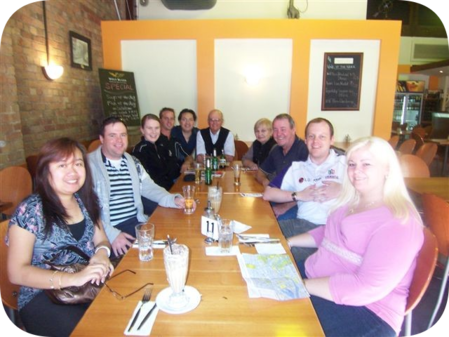
Ascent Melbourne Lunch - 2004
2005’s

In September 2006 Michael Bray announced his retirement. He sold his share of the business to Nigel but remained working part time up to June 2008 when he fully retired. On his last day we invited all his clients into the office for drinks and to say a big thank-you for all his time, effort and the support he gave not only clients but staff as well.


Over the period 2006 to 2009 there was a lot of changes. Not only internally as technology got better and systems improved but we needed a fresh new look and office. The new logo and branding was done in 2006. It brought a fresh new look and excitement as we introduced it to the local community. The big change was the new office. In October 2006 we finished the complete refurbishment of our brand new office at Unit 4 and Unit 5 Mason Street, the units were combined into one big office with the latest technology. The staff had fun deciding on what offices they wanted and where things should be and go.


Ascent Business Directions Logo in 2006

Brendan started with Ascent as a graduate accountant in July 2007. He started on a part time basis while studying at Curtin University. When Danielle started with Ascent in June 2009 she replaced Fiona as receptionist. Fiona left to have her 1st child but continued to drop in and say hello. 


Brendan and Danielle at our Team Bowling Day – August 2017

Over the period of time from 2009 and 2014 the business achieved significant targets and goals. To recognise these and to thanks staff we had not only the trips to Melbourne but also trips to Abbey Beach in Busselton, to Dunsborough and a few stays at the Crown in Perth. The Ascent family grew as staff had their own children. It was nice to see the kids and the families on these trips. But who can forget the games of Arsehole each night while having a few drinks and Cocktails.


In August 2013 Helen said goodbye as she retired. To celebrate we had a lunch at the Witches Cauldron to try their famous garlic prawns. It ended up being a bit of pub crawl as we finished at “The Vic” before taxis picked us up. As a thankyou Helen got a famed, signed jumper of her beloved Ben Cousins. It was interesting carrying that around to each pub!


Katrina and Helen at Helen’s Farewell Lunch Party with Bora carrying the Beloved Signed Jumper

One thing that has never changed is the love of AFL footy with the staff. Each year we have our footy tipping competition and we have now invited clients to participate as well. We have all had a turn at winning this and taking the prize money. Even Danielle had a win but we are still working out how. Brendan though always forgets to put his tips in even with all the staff reminding him. Staff catch ups to watch the footy especially the derbies are regular. One time stands out with Bora falling asleep in the Crown Casino after the game. His wife was trying to call him to pick him up but he was sound asleep.


A significant milestone for Ascent was our second rebranding in 2015. On the 1st July 2015 we had a name change to Ascent Accountants. We got our new logo, promo material and brand which was long overdue. Our new website was designed to engage existing and new clients which was needed to have an online and social media presence. Everyone still says how Nigel was 100% against the change however Nigel says he was actually the driving force behind it. The name has been the most significant change as this made it clear what we do so the local community could identify with us. 


Ascent Accountants Logo in 2015

Albert started with us as a graduate accountant in August 2015. Again he started part-time as he completed his Curtin University degree. When Lauren started in February 2016 as receptionist, Danielle moved into the Office Manager role and Katrina moved into the Bookkeeper/Payroll Manager role. Steve has recently started with us. Again you guessed it, he is working part time as he finishes his Curtin University degree.


Albert and Lauren at our Team Bowling Day – August 2017


Steve is pictured at our Salt & Co Staff Cooking Class in April 2018

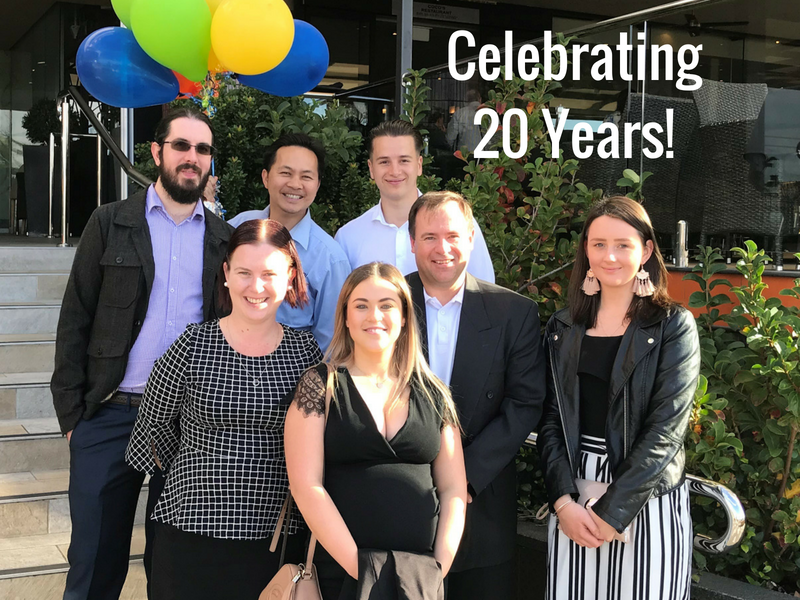
Ascent Accountants has been operating in Cannington for the past 20 years. We have been fortunate that we have had loyal clients and a number of those clients have actually been using us since we started back in 1998. We have seen Bunnings start and go from across the road. It is still a mystery what will be there next. We have been supporting local events during this time but our support of the Royal Flying Doctors has never changed. We were fortunate enough to have a tour of the facilities in 2015 and learn how they operate.


Ascent Accountants wants to continue to be part of and help the local Canning community. We will continue to keep up to date technically and keep up to date with innovations so we can continue to service our clients and the local community. We look forward to many more years to come.

Salt & Co Cooking Class in April 2018

Pictured: Steve, Albert, Brendan, Bora, Lauren, Katrina, Nigel and Danielle


Need help with your accounting?

Find Out What We Do
October 13, 2026
When you're looking for ways to save money, it's easy to focus on the big expenses.  But sometimes the easiest savings are sitting in the things you pay for every month without really thinking about them. Subscriptions, unused services and small recurring expenses can quietly add up over time. Here are five simple things worth checking. 1. Audit Your Subscriptions Start by looking at all the subscriptions you're currently paying for. Go through your Apple App Store or Google Play Store accounts and check what you're being charged for each month. You may find subscriptions you've forgotten about, apps you no longer use or services that are automatically renewing. Even a few dollars here and there can add up to a significant annual expense. 2. Cancel Services You Don't Use If you've paid for a service that you haven't used in the past month, ask yourself whether you really need it. Unused streaming services, apps, memberships and other recurring payments can continue taking money from your account long after you've stopped using them. Cancelling an unnecessary subscription is one of the easiest ways to stop the leakage. 3. Negotiate Better Deals If you've been with the same provider for a long time, don't assume you're already getting the best deal. It may be worth contacting your provider and asking whether there is a better plan or rate available. This could apply to a range of services where you're a long-term customer. A few minutes spent asking the question could result in ongoing savings. 4. Set Reminders for Renewals Free trials and annual subscriptions can be easy to forget about. Set a reminder for when a free trial ends or when a subscription is due to renew. That gives you the opportunity to decide whether you still want the service before you're charged again. Your calendar or phone can prompt you. 5. Track Your Spending Small expenses are easy to overlook when they're spread across multiple accounts and services. Using a budgeting app or regularly reviewing your transactions can help identify areas where you're spending more than you realise. You may discover recurring payments or habits that no longer represent good value. Small Changes Can Add Up Saving money doesn't always require a major lifestyle change. Sometimes it's simply about paying attention to where your money is going and cutting expenses you no longer need. The article provided makes the same point: regularly reviewing subscriptions and cutting back on unnecessary expenses can help build a stronger financial foundation. saving costs things to look at At Ascent Accountants, we can help you look at the bigger picture of your finances and identify opportunities to make your money work harder for you.
October 13, 2026
Finding a caveat on a property you're looking to buy can be an unwelcome surprise. A caveat can prevent certain dealings with a property from being registered, which can delay a sale or prevent a purchaser from settling until the issue has been dealt with. It can also create problems with finance because lenders generally require clear title. First, What Is a Caveat? A caveat is a legal notice recorded against a property. Importantly, a caveat may only be lodged by a person or entity with a legal or equitable proprietary interest in the land. It effectively acts as a statutory injunction, preventing the Registrar of Titles from registering certain dealings with the property, such as transfers, mortgages or leases, unless the caveat is withdrawn, removed by court order or otherwise lapses. caveat on properties Why Might a Caveat Be Lodged? There are several reasons why a caveat may be placed on a property. These can include securing a debt owed by the borrower, protecting a buyer's equitable interest in land under a contract of sale, or protecting an unregistered or equitable mortgage. A caveat can therefore indicate that another party has an interest in the property that needs to be resolved. How Can a Caveat Affect a Property Purchase? If you're buying a property with a caveat on the title, it can complicate the transaction. For example, the sale may be delayed or prevented from proceeding until the caveat has been dealt with. It can also affect finance. Lenders generally require clear title, so an unresolved caveat may make it difficult to obtain or finalise finance. What Should You Look Out For? If a caveat appears on a property, you're considering buying, don't simply assume it will disappear before settlement. Find out: Why the caveat has been lodged. Who has lodged it. What interest the caveator is claiming. Whether the caveat needs to be withdrawn or formally removed. Whether it could affect your ability to settle or obtain finance. The type of caveat matters too. The source material identifies different types, including absolute caveats, subject-to-claim caveats, caveats lodged after notice, improper dealing with caveats and registered proprietor's caveats. caveat on properties How Is a Caveat Removed? There are several possible ways of dealing with a caveat, depending on the circumstances. These can include withdrawal by the caveator, statutory removal or court resolution. A withdrawal generally needs to be signed by the caveator and lodged electronically where required. There is also a process for applying for removal under section 138B of the Transfer of Land Act 1893. caveat on properties The caveator has 21 days after being served with the relevant notice to act, although the Supreme Court may order an extension in some circumstances. Don't Let a Caveat Catch You by Surprise If you're buying or selling property, understanding what is recorded on the title is an important part of the process.  An unexpected caveat doesn't necessarily mean a property deal can't proceed, but it does mean there is an issue that needs to be understood and dealt with. At Ascent Property Co, we can help you understand the financial implications of a property transaction and work alongside your legal advisers to help you make informed decisions.
October 13, 2026
Are you using the logbook method to claim car expenses? The ATO has been increasing its audit focus on car expense claims, with particular attention being paid to both whether logbooks meet the requirements, and if the business-use percentage has been calculated correctly. Here are eight common areas that could cause potential issues with your claim. 1. Keeping a logbook in the wrong income year A valid logbook must be kept in the first income year in which you use the logbook method to claim car expenses. After that, a new logbook is generally required every five years. If you're not sure whether your current logbook is still valid, it's worth checking before relying on it for your tax return. 2. Not keeping the logbook for the full 12 weeks A valid logbook needs to cover a continuous period of at least 12 weeks. The 12-week period can cross from one income year into another, provided it includes part of the relevant income year. 3. Choosing your busiest 12 weeks It can be tempting to choose a 12-week period when you were doing more business driving than usual. But the business-use percentage from a 12-week logbook isn't automatically the percentage you can apply for the entire year. Your calculation needs to consider variations in how the car was used throughout the year. 4. Forgetting about a replacement car If you replace your car during the income year, you can't simply transfer your existing logbook to the new vehicle due to changes in usage. If you want to rely on the existing logbook for the replacement car, there are nomination requirements that need to be met. Otherwise, a new logbook may be required. 5. Writing vague descriptions of business trips The details matter. A logbook needs to record the relevant details of each business journey, including the dates, odometer readings, kilometres travelled and the purpose of the journey. Entries such as "business trip", "client visit" or "customer visit" may not be enough . The description should explain why the journey was made. 6. Reconstructing your logbook later Your logbook should be kept as you make the journeys, or as soon as possible afterwards. Inconsistent entries, duplicated dates, identical odometer readings or records that don't line up with other information can raise questions about whether the logbook was reconstructed from memory. 7. Getting business and private kilometres wrong Your business-use percentage needs to be based on a reasonable estimate of your business kilometres for the year. That means considering changes in your work, holidays, leave, changes in employment duties, changes in your work location and other variations in how the vehicle was used. 8. Forgetting your odometer records and receipts A logbook is only part of the record-keeping requirements. You also need odometer records for the relevant period, and car expenses such as registration, insurance and servicing generally need to be supported by appropriate records. What Should You Do?  If you use the logbook method, don't assume that having a 12-week logbook automatically makes your claim correct and compliant. The ATO's increased scrutiny means it's important to make sure your logbook is valid, your entries are accurate and your business-use percentage reflects how the vehicle was used throughout the year. At Ascent Accountants, we can help you review your car expense records and make sure your logbook and business-use calculation meet the requirements before you claim.
September 14, 2026
In your 50s and thinking about retirement? Discover 10 practical strategies to boost your super and get your retirement savings on track.
September 14, 2026
Buying your first home? From deposit schemes to stamp duty concessions, here are 5 government schemes that could help you get into the market sooner.
September 14, 2026
A new way to claim work-related expenses is coming for the 2027 tax return — but there is an important catch. From 1 July 2026, eligible taxpayers can claim a standard deduction of up to $1,000 for certain work-related expenses, without having to substantiate each expense individually. Sounds simple enough. But before you assume you can claim $1,000 on top of everything else, there are a few things you need to know. The $1,000 Is the Maximum The new standard deduction is capped at $1,000. It is designed to cover certain common work-related expenses, such as work-related phone and internet, home office expenses, stationery and some travel expenses. You can't claim the $1,000 and then claim those same expenses again separately. If you have actual work-related expenses of more than $1,000, you can continue to claim your actual expenses under the existing rules, provided you meet the requirements and have the records to support them. Do I Still Need to Keep My Receipts? Yes: and this is where it is worth being organised. If you use the standard deduction, you don't need to substantiate the individual expenses covered by it. But if you think your actual work-related expenses could be more than $1,000, keeping your receipts and records throughout the year will allow you to claim your actual expenses instead. There are also some deductions that aren't covered by the standard deduction and can still be claimed separately if you are eligible. It's for Your 2027 Tax Return The new deduction applies from the 2026–27 financial year, so you won't use it for the tax return you are preparing now. It will first apply to your 2027 tax return, lodged from July 2027. Is the $1,000 a $1,000 Tax Refund? No. The $1,000 is a deduction from your taxable income. It doesn't mean you'll receive an extra $1,000 back from the ATO. The value of the deduction will depend on your individual tax circumstances. What Should You Do Now? The best thing you can do is keep track of your work-related expenses throughout the 2026–27 financial year. When it comes time to prepare your 2027 tax return, we can look at your circumstances and determine whether the standard deduction or claiming your actual expenses is likely to give you the better outcome.  At Ascent Accountants, we can help you make sense of the new rules and make sure you're claiming the deductions you're entitled to: without claiming the same expense twice!
More Posts